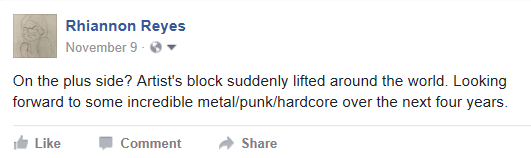
One of my artistic idols, Amanda Palmer, got dragged on Twitter yesterday for having the same sentiment I did the day after the election.
What made this less appropriate for Palmer to say than me (even though it was still a really bad take on my part)?
She’s a successful, rich, white woman who won’t even be in the U.S. for the next five years, so there’s almost no risk for her in creating subversive art. She’s removed from ground zero while cheerfully encouraging the rest of us to #resist. Thing is, some of us have already been resisting. If anyone’s unaware, electing Obama didn’t magically make everything easier for people of color and LGBTQ. Resistance to misogyny and institutionalized bigotry is a daily fight that’s just going to get riskier under Trump.
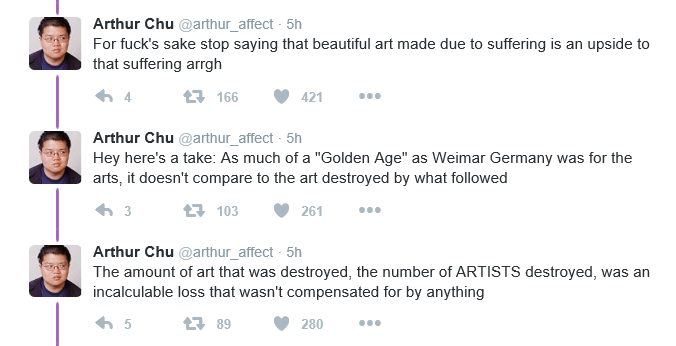
It’s been said that authoritarianism clears out its safe space by getting rid of artists first. Patton Oswalt posted an essay about this on Facebook that’s haunted me for the past few weeks.
Under fascism, getting exposure can literally put you and your family in danger. If you think I’m exaggerating, read about Zoë Quinn, Anita Sarkeesian, or even Republican strategist Rick Wilson. What happened to them happened during normal democratic operations, where fascist sympathy exists on the fringes. We’ve been dealing with creeps who target people for the slightest whiff of opposing ideology. This is not an equal and opposite reaction to “PC culture,” either. SJWs will dogpile but it rarely devolves into doxing or threatening members of the offender’s family.
Many artists who have been marching ahead in the face of all that are now wondering if it’s time to change careers.
It was hard before, it might be near impossible now. There’s more immediate work to be done; depression and anxiety are crowding out inspiration; new policies will add obstacles to institutions already fraught with prejudices; bigoted hecklers have become empowered; personal safety is a consideration made before hitting “Share” let alone pursuing more public exposure.
A big problem with Palmer’s and my own misdirected optimism is the whole starving/suffering artist cliché. It hasn’t earned the credibility we give it. It should be dismissed as an outright myth. I’d even call it a tool of the bourgeois class used to keep artists poor, limiting their output and reach: “But real artists don’t sell out. Real artists have grit; they’ve known struggle.” Almost every creative person has encountered some form of this dissuasion.
It’s bogus. It’s poison. Don’t buy it.
What would make for a society that nurtured artistic growth?
That would honestly do it. Instead we had to watch in horror last month as progress in that direction was all but thrown on the fire.
Now, I don’t mean to come off as stubbornly optimistic, but I don’t want to ignore the sense of galvanization some artists felt after the election. I’ve been silent and invisible. It was cowardly before, but to remain so now is deplorable. Post-election, art moved up in scale from personal to communal, even if what you’re putting out isn’t political. The very act of sharing art that draws from our deeply personal inner wells is rebellion when we’ve made our anti-authoritarian opinions known to our audiences.
There are many ways to resist and political art is one of them. But let me never again underestimate just how much it costs politically vocal or socially marginalized artists to share their talents.

 BLOG OF RHIANNIMATOR